

Does Canned or Jarred Tomato Paste Contain Preservatives? The Truth You Should Know
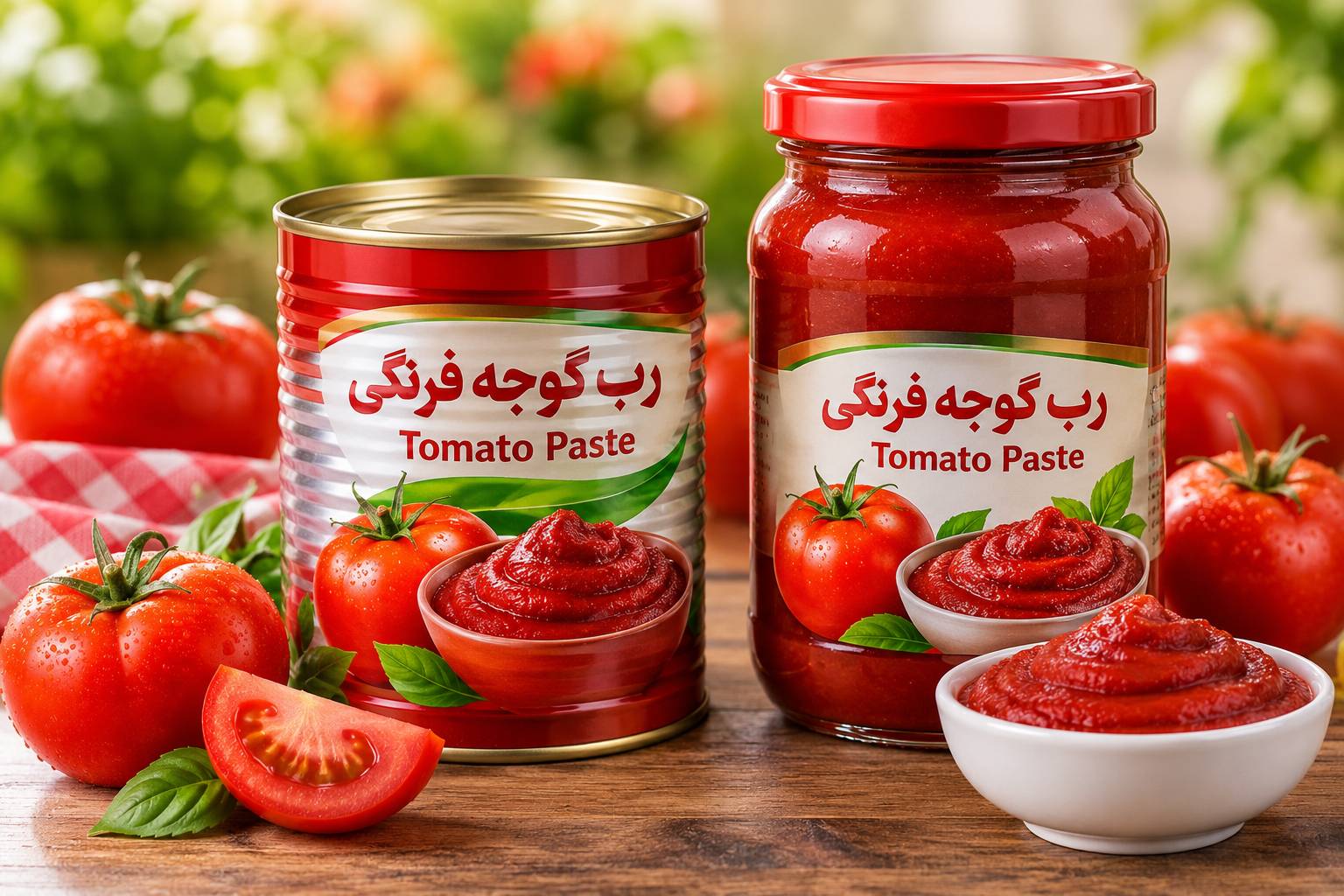
Have you ever bought a can or jar of tomato paste and wondered how it can stay fresh for months at room temperature without developing mold or spoiling?
Many people believe that the secret behind this long shelf life is the use of chemical preservatives. Some even assume that canned and jarred tomato paste must contain substances such as sodium benzoate, and that it would be impossible to keep the product fresh for so long without them.
But is that really true?
No. Commercial tomato paste does not necessarily need chemical preservatives to achieve a long shelf life. In fact, properly manufactured tomato paste relies on several preservation methods, including controlled heat treatment, adequate concentration, acidity control, and hygienic, airtight packaging.
In this article, we'll explain in simple terms how canned and jarred tomato paste can remain safe and stable for months without chemical preservatives. We'll also look at the difference between pasteurization and sterilization and explore whether preservatives are actually permitted in tomato paste.
1. Does Canned or Jarred Tomato Paste Contain Preservatives?
Let's start with the main question.
One of the biggest reasons consumers suspect that industrial tomato paste contains preservatives is its long shelf life.
For example, a jar of tomato paste may remain in good condition for a year or even longer when stored properly, without showing any signs of mold or spoilage. Naturally, this raises an important question: Can a food product really have such a long shelf life without chemical preservatives?
The answer is yes.
Industrial tomato paste production uses several methods to extend shelf life, many of which are physical and thermal processes rather than the addition of chemical substances.
Interestingly, according to Iranian National Standard No. 761 for Tomato Paste, the use of preservatives and artificial colors is not permitted in this product. Salt is among the permitted ingredients that may be used in its formulation.
This is also supported by scientific studies published in Iran on the quality and safety of tomato paste.
Therefore, if a tomato paste manufacturer produces its product without adding sodium benzoate, potassium sorbate, or other chemical preservatives, there is no inherent reason to be concerned about its shelf life, provided that the manufacturing and packaging processes are properly controlled.
2. What Makes Tomato Paste Last So Long?
To understand this, we first need to look at the natural properties of tomatoes and how tomato paste is manufactured.
The shelf life of tomato paste depends on several important factors that work together to prevent the growth of spoilage-causing microorganisms.
A. The Natural Acidity of Tomatoes
Tomatoes naturally contain organic acids, which give them a relatively acidic environment.
Many bacteria require specific acidity conditions to grow and multiply. An acidic environment can limit the growth of certain microorganisms.
For this reason, the natural acidity of tomatoes is one of the factors that contributes to the shelf life of tomato paste.
However, acidity levels are not the same in all tomatoes. They can vary depending on the tomato variety, growing conditions, and ripeness of the fruit.
B. Concentration and Reduced Water Availability
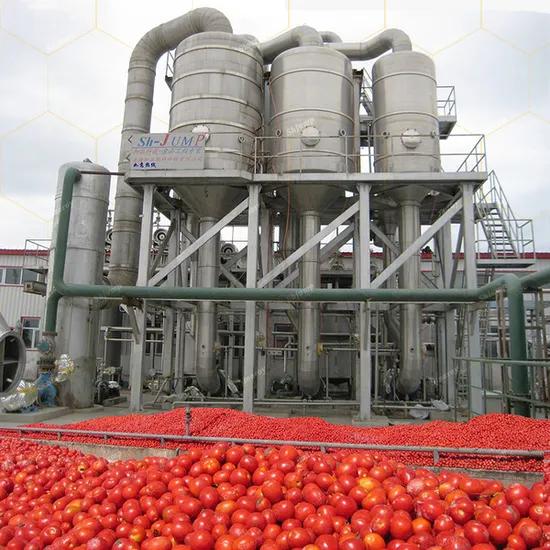
One of the most important stages in tomato paste production is removing a large portion of the water from fresh tomatoes and increasing the concentration of their soluble solids.
During this process, excess water evaporates, resulting in a thicker and more concentrated product.
But what does this have to do with shelf life?
Many microorganisms need available water to grow. The less water available to them, the more difficult it becomes for many spoilage organisms to grow and multiply.
In food science, this property is known as Water Activity (Aw).
It is important to understand that water activity is not the same as moisture content. Two products may contain similar amounts of moisture but have different levels of water available for microbial growth.
Therefore, concentrating tomato paste and reducing its water activity are additional factors that contribute to product stability.
C. Heat Treatment to Control Microorganisms
This is one of the most important stages in industrial tomato paste production.
At the factory, tomato paste is exposed to carefully controlled temperature and time conditions. This process is designed to reduce or eliminate microorganisms that could cause spoilage.
Heat treatment plays a major role in making the product safer and extending its shelf life.
The important point is that the temperature and duration of the treatment must be properly designed and controlled according to the product's characteristics, packaging type, and intended storage conditions.
In other words, chemical preservatives are not necessarily required to preserve tomato paste. A properly designed thermal process can play a major role in achieving the desired shelf life.
D. Hygienic Packaging That Prevents Air and Contamination
Even if tomato paste has undergone proper heat treatment, the reintroduction of microorganisms can still lead to spoilage.
That is why packaging is such an important stage of production.
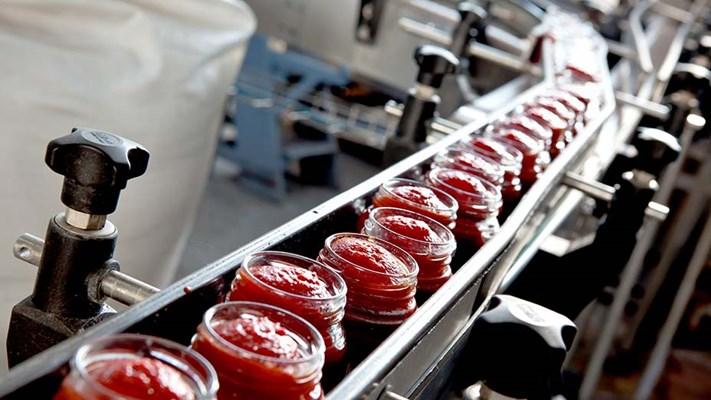
In industrial packaging, after the can or jar is filled, its lid is securely sealed to prevent environmental contaminants and microorganisms from entering the product.
For metal cans, this is achieved through a strong, airtight seal at the lid-body junction. In glass jars, the metal lid and its sealing system play an important role in preventing contamination.
Therefore, the combination of proper heat treatment and hygienic packaging is one of the main reasons tomato paste can have such a long shelf life.
3. Pasteurization vs. Sterilization: Two Important Processes in Tomato Paste Production
You may have come across the terms pasteurization and sterilization on food packaging or in descriptions of food manufacturing processes.
Both are important thermal processes used in the food industry.
But what is the difference between them?
Pasteurization
Pasteurization is a process in which a product is exposed to controlled heat for a specific period of time to reduce the number of disease-causing and spoilage microorganisms.
The purpose is not to eliminate every resistant microbial form, but rather to reduce microbial risks and extend the product's shelf life.
Depending on the type of product, its acidity, packaging conditions, and manufacturing process, pasteurization may be sufficient to preserve the product under specified storage conditions.
Sterilization
Thermal sterilization is designed to achieve a much higher level of microbiological stability.
During this process, the product is exposed to specific, carefully controlled temperature and time conditions to eliminate microorganisms capable of growing under the intended storage conditions.
In the canning industry, a process known as Commercial Sterilization is particularly important.
Commercial sterilization does not mean that a product is absolutely free of every microorganism in the same way as a laboratory-sterile material. Instead, its purpose is to ensure that the product remains microbiologically stable under normal storage conditions and at the specified storage temperature.
This is especially important in the production of canned foods.
The main difference between pasteurization and sterilization lies in the intensity and purpose of the heat treatment, as well as the expected level of microbiological stability.
The appropriate process depends on several factors, including the acidity and concentration of the tomato paste, the type of packaging, and the technology used by the manufacturer.
4. Why Don't Canned and Jarred Tomato Paste Products Need Preservatives?
Now that we understand the main factors behind tomato paste preservation, let's look at the two common types of packaging.
Some consumers assume that canned and jarred tomato paste products require different preservatives because they use different packaging materials.
However, the packaging material alone does not determine whether a product needs preservatives.
Canned Tomato Paste
In the production of canned tomato paste, the product is generally prepared and heat-treated before being filled into food-grade metal cans.
The can lid is then securely attached to the body using specialized sealing equipment.
This process, known as Double Seaming, creates a tight seal that prevents air and environmental contaminants from entering the can.
In many production lines, a final heat treatment takes place after the cans have been filled and sealed. However, depending on the production line technology, other processing methods may also be used.
As a result, canned tomato paste can achieve a long shelf life without the addition of chemical preservatives.
Jarred Tomato Paste
The same general principles apply to glass packaging.
After undergoing the required processing steps, tomato paste is filled into food-grade glass jars, and the metal lids are securely closed.
In many production lines, heat treatment takes place after filling and sealing to bring both the product and its packaging to the required microbiological condition.
The jar's lid-sealing system also helps prevent microorganisms and other contaminants from entering the product.
Therefore, jarred tomato paste can also remain safe for an extended period without chemical preservatives, provided that the manufacturing and packaging processes are properly controlled.
In a nutshell: The shelf life of tomato paste depends on the quality of the manufacturing and packaging processes, not simply on whether it comes in a can or a glass jar.
5. What Are Sodium Benzoate and Potassium Sorbate, and Why Are They Mentioned?
When discussing preservatives in the food industry, you have probably heard of sodium benzoate and potassium sorbate.
These are two well-known preservatives used in certain food products.
Sodium Benzoate
Sodium benzoate is a preservative used in some foods and beverages to help prevent the growth of yeasts, molds, and certain bacteria.
It is particularly effective in acidic environments.
Because tomato paste is naturally acidic, some people may assume that sodium benzoate is necessary to preserve it. However, this assumption is not correct.
Despite the acidic nature of tomato paste, the use of sodium benzoate to extend its shelf life is not permitted for this product under the Iranian national standard.
Potassium Sorbate
Potassium sorbate is another widely used food preservative, particularly for controlling the growth of molds and yeasts.
Although it is permitted in certain food products, its use in tomato paste is not permitted under the Iranian national standard.
One important point to remember is that a preservative being permitted in some food products does not mean it is allowed in every type of food.
Each food product has its own standards and regulations, and manufacturers are required to use only the ingredients permitted for that specific product.
6. Are Preservatives Allowed in Tomato Paste Under Food Standards?
This is a particularly important part of the discussion because the answer can be found in national and international food standards.
Iranian National Standard
According to Iranian National Standard No. 761 (Tomato Paste), the use of preservatives and artificial colors in the production of tomato paste is not permitted.
Therefore, manufacturers must ensure product shelf life through proper manufacturing methods, thermal processing, and suitable packaging.
International Codex Standard (Codex Alimentarius)
Codex Alimentarius is one of the most important international references for food standards.
Under its standard for Processed Tomato Concentrates, CXS 57-1981, the product is defined as a concentrate made by removing part of the water from tomato juice or pulp and preserved by physical means.
The standard also identifies other permitted ingredients under specified conditions, including salt, spices and aromatic herbs, lemon juice, and water.
This definition highlights the role of physical processing methods in the production and preservation of standard tomato paste.
Therefore, the ability to produce tomato paste without chemical preservatives is not simply a marketing claim; it is also consistent with the principles outlined in recognized international food standards.
7. Have Preservatives Actually Been Found in Some Tomato Paste Products on the Market?
So far, we have discussed food standards and proper manufacturing practices.
But can we confidently say that no tomato paste product on the market contains preservatives?
No. Unfortunately, scientific studies conducted in Iran have identified unauthorized preservative compounds in some tomato paste samples.
For example, a scientific study published in 2022 examined 45 samples of bulk tomato paste from one of Iran's provinces for the presence of sodium benzoate and potassium sorbate.
The results showed that:
- Benzoic acid was detected in 17 of the 45 samples.
- The amount of benzoic acid in positive samples reached up to 1,896 mg per kilogram.
- Potassium sorbate was not detected in any of the samples.
- The artificial color Ponceau 4R was detected in three samples.
An important detail about this study is that the samples were bulk tomato paste, not packaged retail products. Therefore, its findings should not be generalized to all canned and jarred tomato paste products on the market.
On the other hand, another study conducted in Kashan, Iran, in 2018 examined tomato paste samples for sodium benzoate and potassium sorbate. Neither of these preservatives was detected in the samples tested.
These findings show that product quality and safety can vary from one manufacturer to another.
Therefore, rather than relying on rumors, consumers should pay attention to standard certification marks, health permits, product labeling, and the manufacturer's reputation.
8. Why Should Tomato Paste Be Refrigerated After Opening?
You may be wondering: If industrial tomato paste can remain fresh for months without preservatives, why should it be refrigerated after opening the can or jar?
The answer is simple.
As long as the packaging remains intact and properly sealed, the possibility of environmental contamination entering the product is very limited.
However, everything changes once the package is opened.
From that moment on, the tomato paste is exposed to air, moisture, dust, and microorganisms that may be present in the surrounding environment and kitchen utensils.
Using a wet or contaminated spoon, leaving tomato paste around the rim of the container, or storing it at room temperature can increase the risk of spoilage.
To help keep tomato paste in good condition after opening, follow these simple tips:
- Keep it refrigerated. After opening, store tomato paste in the refrigerator and avoid leaving it at room temperature for extended periods.
- Always use a clean, completely dry spoon. Introducing moisture and contaminants into the product can encourage mold growth.
- Close the lid tightly. Continuous exposure to air can reduce product quality and increase the risk of contamination.
- Transfer it to a suitable, sealed container if necessary. This can be particularly helpful if the original can is damaged or inconvenient for storage.
- Discard the entire product if you see mold. Removing only the visibly moldy portion and consuming the rest is not a safe practice, as contamination may have spread beyond the visible area.
By following these simple steps, you can better protect the quality of tomato paste after opening.
9. What Should You Look for When Buying Tomato Paste?
Now that we know a long shelf life does not necessarily mean that tomato paste contains preservatives, let's look at a few things to consider when choosing a product.
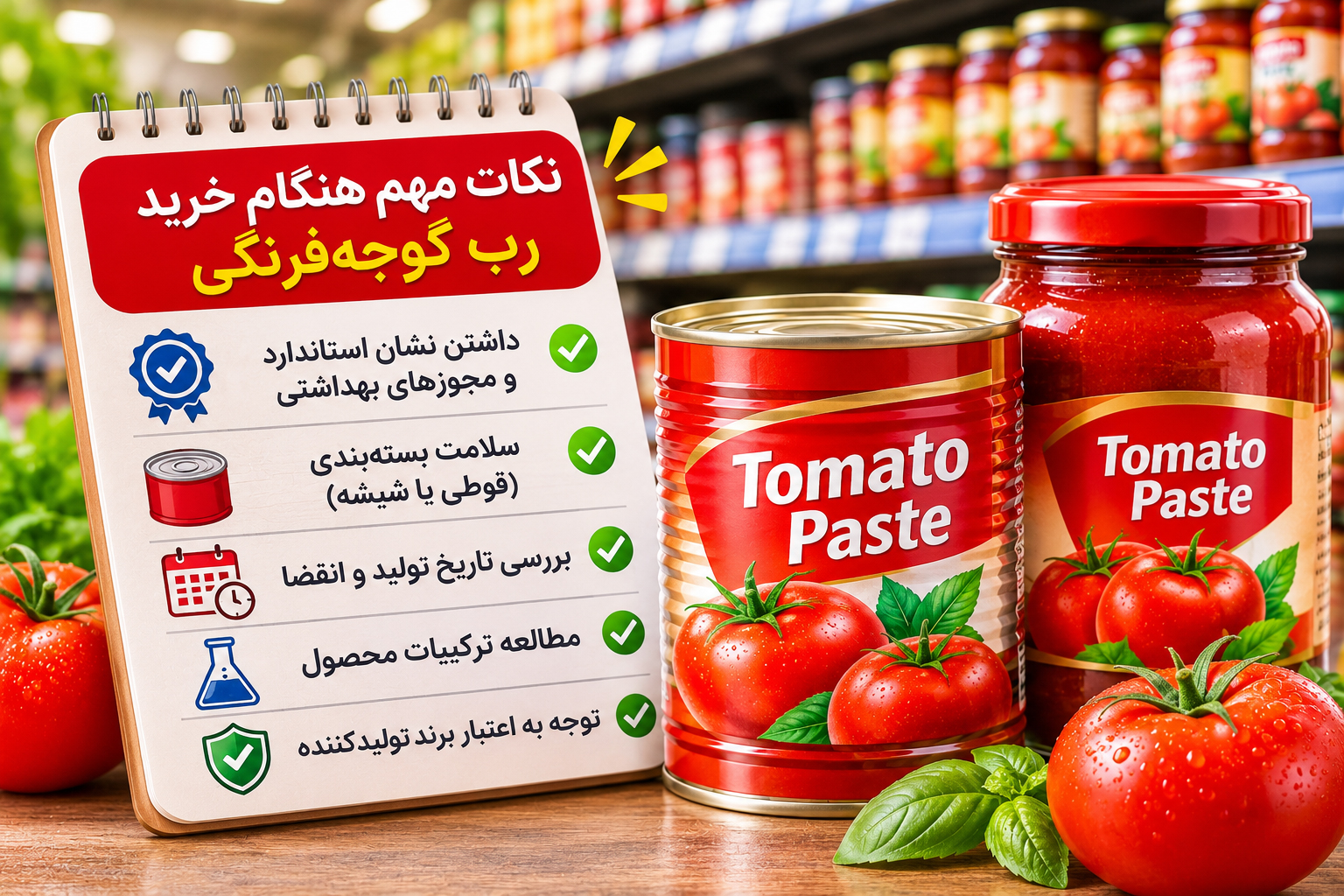
- Standard certification and health permits: Choose products that carry valid standard certification marks and health permits.
- Packaging condition: A metal can should not be swollen, rusty, punctured, or severely dented around its seams. Glass jars should not have cracks or chipped edges.
- Intact lid and seal: The lids of both jars and cans should be intact, with no signs of leakage or tampering.
- Production and expiration dates: Always check the production date, expiration date, and storage instructions printed on the packaging.
- Product ingredients: Read the ingredient information on the label and pay attention to how clearly the manufacturer provides product details.
There is one more thing worth remembering: A deeper red color or thicker consistency does not automatically mean that tomato paste is of higher or lower quality.
The quality of tomato paste depends on several factors, including the quality of the raw tomatoes, the level of concentration, natural color, aroma, taste, and its physical and chemical characteristics.
10. Final Thoughts: Can Canned and Jarred Tomato Paste Be Made Without Preservatives?
Absolutely!
As we have seen, the long shelf life of industrial tomato paste does not necessarily depend on the use of chemical preservatives.
The natural acidity of tomatoes, concentration and reduced water activity, controlled heat treatment, and hygienic, airtight packaging can work together to provide the conditions needed for long-term product stability.
Furthermore, under Iranian National Standard No. 761, the use of chemical preservatives in tomato paste is not permitted.
So, the next time you buy a can or jar of tomato paste and notice a long expiration date, you don't need to immediately assume that chemical preservatives have been added!
High-quality tomato paste can achieve a long shelf life through suitable raw materials, proper manufacturing processes, and standard-compliant packaging, without the need for chemical preservatives.
Rather than worrying about whether tomato paste comes in a can or a glass jar, it is better to focus on manufacturing quality, packaging integrity, and the reputation of the brand.
Tak Ava: Your Trusted Partner for Quality Tomato Paste Supply
With access to high-quality tomatoes from southern Iran and Fars Province, Tak Ava specializes in supplying quality tomato paste. Our in-house quality control team carries out professional assessments of key product characteristics, including color, Brix level, texture, and consistency, helping us provide products that meet our customers' requirements and quality standards.
One of our key areas of activity is toll manufacturing and idle production capacity agreements. These arrangements allow brands and companies to make use of available factory production capacity and source their desired products without investing in their own manufacturing facilities or production lines.
Tak Ava is ready to work with manufacturers, brands, and businesses in both domestic and international markets for tomato paste supply and toll manufacturing projects.
